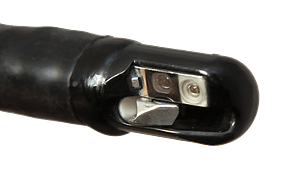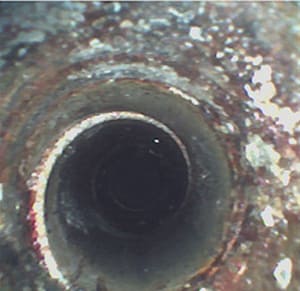
A fascinating one-hour course offered by Ofstead & associates spoke about insoluble substances inside endoscopes after use. Infant gas relief drops, Gas-X, Mylanta Gas, and other products that contain simethicone are inserted in the biopsy channel when there is trouble seeing due to bubbles or foam. These products contain silicone or simethicone, which is an anti-foaming agent. These products aid seeing when foaming interferes with a colonoscopy. Smithicone contamination in endoscope lumens is the result. Reprocessing endoscopes with simethicone contamination is difficult to clean. It is insoluble in water, detergent, and alcohol. Simethicone repels water, making removal from biopsy or water channels very difficult.
Smithicone contamination is a real problem when reprocessing endoscopes. Remaining silicone is a potential contaminant that can infect subsequent patients. It is possible to remove the droplets of simethicone by using swabs. A borescope will visually locate the contamination in the lumen. After cleaning, the borescope can verify cleanliness. Tissue glue can remain inside the channels of colonoscopes. If tissue glue is allowed to harden in the instrument channel, it is difficult to remove. The instrument channel becomes blocked, and the instrument needs to repair. Household cooking spray used as a lubricant in the instrument channel. Cooking spray is another source of simethicone (silicone) residue. The residue is difficult to clean. It resists cleaning with hot water and detergent.
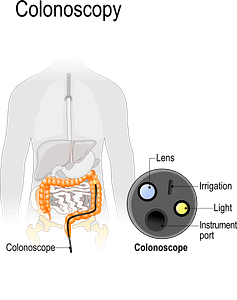
Smithicone contamination in endoscope lumens (Instrument Port)
Visual Detection of Smithicone Contamination in Endoscope Lumens
There are many of the issues when reprocessing endoscopes. Use a borescope to inspect endoscope lumens after cleaning. A borescope visually verifies cleanliness.
All endoscope lumens need visual inspection after cleaning to locate residual material that remains. The fact that simethicone is found inside endoscope lumens after cleaning makes a strong case for a visual inspection program. Borescopes should be the center of a visual inspection program. Visual inspection of endoscope lumens after cleaning can prevent future infections. Brushes and water will typically not aid in removing simethicone. Use swabs to clean residual material from lumens. Repeat this process until the lumen can be verified to be clean with the aid of a borescope.