Read More

Using Borescopes In The Sterile Processing Department

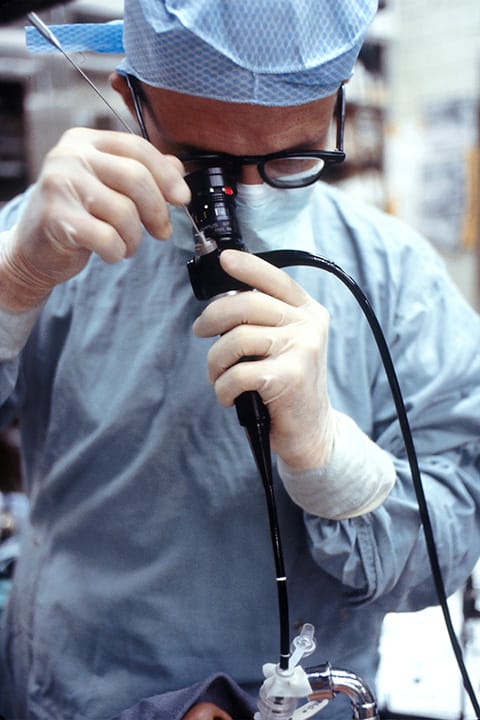
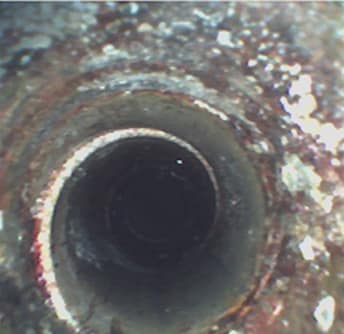
The use of flexible borescopes to inspect inside medical instruments and endoscope lumens is a recent advancement. The use of a borescope for sterile processing makes it easier for technicians to visually inspect lumened instruments, endoscopes, and arthroscopic shavers. Incredibly small diameter borescopes (.5mm) allow sterile processing technicians to inspect all instruments. In the past, it was impossible to visually inspect medical instruments and endoscope lumens after cleaning. With the aid of a borescope, a sterile processing technician can quickly see if there are any leftover bioburden and damage to the lumen.

Today borescopes designed for sterile processing have large high-resolution displays, a choice of interchangeable probes, video recording, still image capture, and text annotation. The Endoinspect is the first borescope design from the ground up for use in the sterile process department. The EndoInspect gives sterile processing technicians the ability to visually inspect all of their medical instruments and endoscopes with a choice of 5 different diameter borescopes. Your sterile processing department will be able to visually inspect the following:

Read More

FDA: Duodenoscope Cleaning Still a Problem

 WASHINGTON — Aggressive efforts by the FDA and manufacturers of duodenoscopes in recent years have not succeeded in eliminating bacterial contamination problems with the devices after reprocessing, the agency said in a Safety Communication issued late Monday.

Following revelations in 2015 that scores of patients had developed abdominal infections following endoscopic retrograde cholangiopancreatography (ERCP) procedures using reprocessed duodenoscopes, the FDA ordered manufacturers including Olympus, Fuji, and Pentax to upgrade their recommendations for post-procedural cleaning and to conduct regular testing to determine how well the procedures are working.

“Interim results from these studies indicate higher-than-expected contamination rates after reprocessing, with up to 3% of properly collected samples testing positive for enough low concern organisms to indicate a reprocessing failure and up to 3% of properly collected samples testing positive for high concern organisms,” the agency said in the Monday statement. “High concern organisms” include E. coli, Pseudomonas aeruginosa, and others associated with the disease, the FDA explained.

An FDA advisory committee meeting in 2015 agreed that duodenoscopes for ERCP procedures cannot be completely sterilized in every case — they contain hinged parts such as elevators at the working tip where organisms may lodge and evade removal or killing. Small cracks and other forms of damage can also occur with repeated use, which can also complicate thorough cleaning.

Yet while calling the reusable devices inherently unsafe, panel members also reluctantly irreplaceable for patients with pancreatic disease. Manufacturers had not then, and still have not, developed single-use instruments that are sufficiently economical for clinicians and payers.

In the new statement, the FDA advised endoscopy clinics that automated reprocessing is not sufficient. The agency said staff should “[m]eticulously clean the elevator mechanism and the recesses surrounding the elevator mechanism by hand, even when using automated endoscope reprocessors” (emphasis added). It also emphasized visual inspection for remaining debris or damage after reprocessing and again prior to use.

Clinics should also develop “a comprehensive quality control program [that] should include written procedures for monitoring training and adherence to the program, and documentation of equipment tests, processes, and quality monitors used during the reprocessing procedure.”

Separately on Monday, federal prosecutors obtained a guilty plea from an Olympus subsidiary to settle criminal charges that the company failed to report infections it knew about that were related to the use of its duodenoscopes. The firm agreed to pay an $80-million fine as part of a plea deal.

Problem— “Higher-than-expected contamination rates after reprocessing” in recent studies

by John Gever, Managing Editor, MedPage Today

December 11, 2018

Read More

What is Sterile Processing?

The Sterile Processing Department (SPD), also known as the Central Sterile Services Department (CSSD), is the area in a hospital where cleaning and sterilization of devices used in medical procedures takes place. The processes an instrument goes through in the CSSD depends on its use, material construction, and other factors. Typically, an instrument coming from the Operating Room arrives at the Decontamination area to be manually cleaned, then placed in an ultrasonic cleaner or sonic irrigator before being placed into a washer/disinfector. Next, the instrument would be transported to a Prep & Pack area to be prepared for sterilization. It will then be sterilized through one of many types of sterilization processes. Once sterilized, the instrument will either be sent back to a procedure room to be used again, or into sterile storage until it is needed again for a procedure. Sterile Processing Department Technicians are required to wear Personal Protective Equipment (PPE) as a safety precaution to prevent exposure to potentially infectious bacteria.

1 THE DECONTAMINATION PROCESS

Soiled instruments from the OR are first taken to the decontamination area to be cleaned of gross soils and inspected for damage. The decontamination process is an important stage in device reprocessing because an instrument or device cannot be sterilized until fully clean. In the decontamination process, soiled instruments are sorted, inspected and if necessary, disassembled. Instruments are first manually cleaned. Depending on the device, they may then go through an automated washing process following manual cleaning. The reasons CSSD staff may choose to manually clean a device/instrument include: The OEM recommends the device be manually cleaned Hospital policy dictates the device must be manually cleaned and then processed in an automated washer/disinfector

Delicate instruments or powered equipment may not be suitable to be processed in an automated washer/disinfector
The hospital may not have a washer/disinfector
Manual cleaning requires either a two-bay sink or three-bay sink. In a three-sink method, each bay plays a role in the cleaning process.1 Sink 1: Instruments are immersed in an enzymatic solution to begin breaking down soils
Sink 2: Instruments are immersed in a detergent solution and manually brushed
Sink 3: Instruments are thoroughly rinsed with clean, treated water

If a two-bay sink is being used, the process combines the enzymatic solution and detergent solution in one bay. The second bay contains clean, treated water as with the three-bay sink. If cleaning a lum

ened instrument or device, a brush or flushing with pressurized water may be used to loosen soils. Lubricant may be applied after manual cleaning. Explore our Decontamination Sinks

The reasons CSSD staff may choose to mechanically clean a device using an ultrasonic cleaner or irrigator and a washer/disinfector include: Washer/disinfectors offer increased productivity compared to staff manually cleaning Washer/disinfectors provide a consistent, repeatable cleaning process so staff can be sure devices are thoroughly cleaned every time
One form of mechanical cleaning is ultrasonic cleaning. Ultrasonic cleaners clean instruments through acoustic cavitation, which forms air bubbles that implode on an instrument’s surface. These air bubbles can reach small crevices and hard-to-reach areas on a device. Ultrasonic cleaners are typically used to clean devices that may be sensitive to damage, and are too delicate for a traditional washer/disinfector. Ultrasonic cleaners have two chambers, and may come in a variety of sizes and types depending on the department’s need: freestanding, tabletop, large capacity, etc.

Explore our Ultrasonic Cleaners

The mechanical cleaning process may also be done via automated washer/disinfectors, which are available as single-chamber or multi-chamber. The washer/disinfector combines impingement, water temperature, and detergent to clean devices.

Explore our Washer/Disinfectors In both ultrasonic cleaner and washer/disinfector processes, cleaning indicators are often used to monitor and evaluate the performance of the wash cycle.

THE STERILIZATION PROCESS

Once the instrument has been manually cleaned, mechanically cleaned, or both, it will be sent to the preparation and packaging area of the SPD. Once the instrument pack has been prepped for sterilization, it is ready to be sterilized through one of many methods of sterilization. The main methods of medical instrument sterilization include:1 Steam Sterilization – Steam sterilization is the predominant form of sterilization in SPDs. A steam sterilizer, also known as an autoclave, is suitable for sterilizing heat and moisture-stable items. Steam sterilization cycle types include gravity, pre-vacuum and SFPP (Steam Flush Pressure Pulse). Cycle time varies according to cycle type, load weight and density and other variables such as exposure and drying time. At the end of the sterilization cycle, the SPD technician reviews the sterilizer printout to verify if all sterilization parameters have been met.

Biological and chemical indicators are used to monitor the sterilization process and indicate if the load was exposed to the appropriate conditions to achieve sterility. Explore our Steam Sterilizers Low Temperature Sterilization – Other forms of sterilization may include low temperature sterilization methods like ethylene oxide (EtO), vaporized hydrogen peroxide, liquid chemical and ozone. Ethylene Oxide Sterilization consists of five stages – preconditioning and humidification, gas introduction, exposure, evacuation, and air washes – and takes about 1 – 4.5 hours. Aeration time makes the cycle time longer – an additional 12 – 36 hours.

Vaporized Hydrogen Peroxide Sterilization, Also known as hydrogen peroxide gas sterilization, is a low temperature sterilization process commonly used to sterilize heat-sensitive devices. A hydrogen peroxide sterilization process involves H2O2 vapor filling the sterilization chamber, contacting and sterilizing exposed device surfaces. Once the sterilization cycle has completed, the vapor is removed from the chamber and converted to water and oxygen.

Liquid Chemical Sterilization provides safe and effective reprocessing of heat-sensitive, critical and semi-critical devices such as duodenoscopes and other complex endoscopes.

Ozone Sterilization is one of the newest of the sterilization methods. With an extra oxygen atom attached to the molecule, ozone is able to destroy microbes to sterilize devices. Ozone leaves no chemical residue and there are no toxic emissions.
STERILITY ASSURANCE Ensuring that an instrument is sterile and safe to use is vital to the reprocessing cycle. Sterility assurance monitoring can be done through various forms of test packs, chosen based on the type of sterilization process used or parameters being measured. A passing biological and chemical indicator test confirms that specific parameters of a sterilization cycle were met. Some types of sterility assurance products include:

1 Biological Indicators – Biological indicators (BI) are designed to challenge the lethality of a sterilization process to kill bacterial spores. Biological indicators are used within process challenge devices or challenge packs for routine monitoring, load monitoring and qualification of the sterilization systems. The frequency for using biological indicators is based on the standards, the manufacturer’s instructions for use and the facility policies and procedures. A passing BI result indicates that the load can safely move on to sterile storage or the OR. Chemical Indicators – Chemical Indicators (CI) may be applied externally or internally to the package container. External chemical indicators, also called process indicators, show that the set has been fully exposed to the sterilization process. Internal chemical indicators, which come in a variety of forms, are placed in the most challenging area of the set and are read by OR staff to confirm that sterilant penetrated the load.

Bowie Dick Test – Bowie Dick Tests are required for steam sterilizers with a pre-vacuum cycle to check the efficiency of the air removal and steam penetration in the chamber. This test must be run daily before any pre-vacuum cycles are run.

Read More

The Importance of Visual Inspection for Endoscope Reprocessing

Sri Mandava Infection Control Managing Endoscopes Patient Safety Regulatory Compliance Visual inspection has emerged in recent years as an important quality assurance step during endoscope reprocessing. Updated guidelines from AAMI, AORN and SGNA have all included a visual inspection step during the disinfection process to ensure that scopes are being thoroughly prepared for the next patient.

All three standards organizations have come out in support of adding the visual inspection in order to get a next level verification that all residual soil is removed during reprocessing. These visual inspections, in addition to cleaning verification tests, act as a check on an organization’s cleaning process. If scopes are continuously failing the cleaning verification or visual inspections, the reprocessing process may not be rigorous enough. This article by Mary Ann Drosnock at Healthcare Purchasing News summarizes what to look out for during a visual inspection:

“What are the kinds of evidence you should look for before endoscopes proceed to high-level disinfection? According to the guidelines, the endoscope should be inspected visually for conditions that could affect the disinfection process such as cracks, corrosion, discoloration, retained debris, and poor fiber optic illumination. Other items to inspect for, as noted by AORN, are cleanliness, missing parts, clarity of lenses, integrity of seals and gaskets, moisture, physical or chemical damage, and function. The use of magnification and adequate lighting does help assist in the visual inspection process to identify these abnormalities. These are the common warning signs that the scope is in need of repair or additional processing.

Other warning signs that an item may not be ready to be disinfected or sterilized are peeling of adhesives, cracks in lenses, brush gouge/scrape marks at the distal tip, stretched out covers on the bending section, and soil around or under the control knobs. Essentially, compare the scope to a new one and identify what is different. Then, evaluate if this could be a significant issue that may impact the ability of the scope to be cleaned, disinfected, or sterilized and could this be a risk to the patient?

There are other more obscure warning signs that the endoscope may need more attention or that reprocessing procedures are not in a state of control. Things like moisture retained in the channel upon inspection with a borescope after disinfection would tell you that your drying processes are not adequate. Retained lint/fibers are also very commonly seen upon inspection with a borescope and would bring to light the possible practice that staff members are not using lint-free or low-linting clothes or sponges during reprocessing. Retained brush bristles would warrant investigating the condition of reusable brushes or the possible practice of reusing single-use brushes mistakenly. Internal channels that are heavily damaged by gouging or scraping may warrant taking a look at the physician practices with endoscope accessories, such as keeping the distal tip angulated while passing or removing a biopsy forceps.

Use of a borescope for inspection of internal channels of the endoscopes is an additional step that may be taken to engineer quality into an endoscope’s reprocessing program. Both ST911 and AORN endoscope guidelines do highlight the process within their document. For example, AORN states that “Internal channels of flexible endoscopes may be inspected using an endoscopic camera or borescope. [2: High Evidence] Endoscopic cameras and borescopes penetrate the lumen and allow for improved visual inspection. Certainly, inspection of the internal channels with a borescope is a quality-driven process and will help a facility to assess the condition of their endoscopes, the overall reprocessing procedures and potentially the drying process. The one issue that is often raised with inspection with borescopes is when to perform this process.

Many facilities inspect their scopes periodically after the disinfection process is complete and the scopes are in storage. If doing this, then the scope should be reprocessed again before use. By performing inspection at this stage in the process, a facility can assess their internal drying practices and clearly determine whether it is currently being performed adequately or not. According to SGNA, scopes must be completely dry prior to storage or should not be used on patients without being reprocessed again. Other facilities will inspect with a borescope after manual cleaning prior to disinfection or sterilization. Although this is an option, the scopes are highly contaminated at this point and completely wet internally. A complete drying procedure would need to be initiated after cleaning in order to inspect with the borescope. If not, all that will be seen is water, which is not helpful.

Therefore, to perform a visual inspection, at a minimum the unaided eye should be used to inspect the external surfaces of the endoscope after manual cleaning. Additionally, current standards and guidelines do call for the additional use of lighted magnification to be added to the process of visual inspection. The process of performing cleaning verification is also clearly warranted based upon the current standards and guidelines. Borescopic examination of internal channels is a newer process, but one that is recommended within AAMI ST911 and AORN endoscope guidelines.”

https://www.mobileaspects.com/the-importance-of-visualinspection- for-endoscope-reprocessing/

October 30, 2017

Read More

Surprising substances may be found in your endoscope channels

I recently completed a fascinating one-hour course offered by Ofstead & associates that discussed insoluble substances inside endoscope after use. Infant gas relief drops, Gas-X, Mylanta Gas and other products tha contain simethicone are inserted in the biopsy channel when there is trouble seeing due to bubbles or foam.

The problem for reprocessing endoscopes with simethicone is that it is insoluble in water, detergent and alcohol. Simethicone will actually repel water, making removal from biopsy or water channels very difficult. It is possible to remove the droplets of simethicone by locating the droplets and using swabs. The borescope can then be used to verify the removal of the substance.

The course also discusses how Tissue glue may also be found inside the channels of colonoscopes. If tissue glue is allowed to harden in the working channel it may not able to be removed. The working channel may become blocked and require repair of the instrument. I was also surprised to learn that the use of cooking spray has a lubricant inside working channels is another source of simethicone (silicone) residue. The oils residue can be cleaned using hot water and detergent the simethicone still remains a problem.

This was a very revealing course that exposes many of the issues faced when reprocessing endoscopes. It also reinforces the need to use a borescope to inspect the lumens and channels of endoscopes. I recommend that anyone involved in the reprocessing of endoscopes take the time to learn from this webinar.

Read More

Dangerous bacteria from medical scopes

Pasadena health officials said Wednesday that 16 patients were infected by dangerous bacteria from medical scopes at Huntington Hospital from January 2013 to August 2015, including 11 who have now died. Many of those patients were already severely ill, including some with cancer.

Health officials said that only one of the 11 death certificates listed the bacteria as the cause. It was not clear if infection was a factor in any of the other deaths. The hospital had previously said just three patients were infected in the outbreak that officials said was limited to the middle of 2015. The patient infections were detailed in the Pasadena Public Health Department’s investigation into the outbreak. The report blamed both the design of the scope and the hospital for lapses in infection control. For example, investigators discovered visible residues in the machines used to clean the scopes,according to the report released on Wednesday. Investigators also said the hospital had been using canned compressed air from Office Depot to dry the scopes – which is not recommended by the manufacturer or by cleaning guidelines.

Pasadena health officials said they had found no additional scope-related infections since the start of their investigation on Aug. 19. Dr. Paula Verrette, Huntington’s chief medical officer, said Wednesday the hospital has now changed its practices based on the findings and recommendations of health officials.“Patient safety remains our highest priority,” she said. Lawrence Muscarella, a medical safety consultant in Montgomeryville, Pa. who has been following the scope outbreaks, said the Pasadena case showed that many more patients may have been infected across the country than has been publicly reported.“This shows a total failure of the system, from top to bottom,” said Muscarella. Huntington hospital officials had confirmed last August that three patients were sickened the previous month but declined to say more about their condition. They later told Olympus Corp., the scope’s manufacturer, of at least three deaths, according to the company’s report tofederal regulators.When the regulatory reports were discovered, hospital officials said that they believed patient privacy laws prevented them from telling the public that the unnamed patients had died.

The investigation said that Huntington doctors had started doing their own review of possible infections in July after finding three patients sickened with drug-resistant Pseudomonas  aeruginosa. The hospital staff had identified as many as 35 cases of possible infections, which they had been evaluating before Pasadena officials arrived on Aug. 20 in an unannounced site investigation. The health officials concluded that 15 of these cases were linked to procedures the patients had with an Olympus scope. Then in March, hospital officials told the health department that they found an additional patient who was infected. That patient had a scope procedure in July 2013.The hospital found 13 other patients infected with the bacteria but determined they were not sickened by the scopes. Huntington doctors told health officials on May 23 that they were now notifying all patients who had been treated with the scopes since January 2013 about the possibility of infections.

Previously, the hospital had notified only those patients who had been treated between Jan.2015 and August 20, 2015. The duodenoscope is a long snake-like tube with a tiny camera on the tip that is inserted into a patient’s throat and upper gastrointestinal tract. It is used to treat cancer, gallstones and other problems in the bile or pancreatic ducts. In January, Olympus recalled one model of its reusable duodenoscopes because of the possibility that it could transfer bacteria between patients. That model was linked to two other Southern California outbreaks at UCLA Ronald Reagan Medical Center and Cedars Sinai Medical Center. Two of the reusable scopes suspected of causing the Pasadena outbreak had a different, older design from the one that Olympus recalled. The investigation said that tests had found the bacteria Pseudomonas aeruginosa on three of Huntington’s scopes. Investigators also found another kind of bacteria inside the washer used to clean the scopes.“This broad bacterial contamination,” the report said, “supports the hypothesis” that disinfection and maintenance “were insufficient to prevent the spread of infection.”In a visit on September 11, Pasadena officials found that the hospital had improved its cleaning of scopes, including doing “major maintenance” on the machines used to disinfect them. They said that Olympus specialists had been to the hospital multiple times to train the staff on proper disinfection procedures.

LA Times June 1, 2016

Melody Peterson

Read More

Study finds reusable medical scopes test positive for bacteria

In an ominous sign for patient safety, 71% of reusable medical scopes deemed ready for use on patients tested positive for bacteria at three major U.S. hospitals, according to a new study. The paper, published recently in the American Journal of Infection Control, underscores the infection risk posed by commonly used endoscopes. It signals a lack of progress by manufacturers, hospitals and regulators in reducing contamination despite numerous reports of superbug outbreaks and patient deaths, experts say. “These results are pretty scary,” said Janet Haas, president of the Association for Professionals in Infection Control and Epidemiology. “These are very complicated pieces of equipment, and even when hospitals do everything right we still have a risk associated with these devices. None of us have the answer right now.” The study found problems in scopes used for colonoscopies, lung procedures, kidney stone removal and other routine operations. Researchers said the findings confirm earlier work showing that these issues aren’t simply confined to duodenoscopes, gastrointestinal devices tied to at least 35 deaths in the U.S. since 2013, including three at Ronald Reagan UCLA Medical Center. Scope-related infections also were reported in 2015 at Cedars-Sinai Medical Center in Los Angeles and Pasadena’s Huntington Hospital

The bacteria this latest study found weren’t superbugs, but researchers said there were potential pathogens that would put patients at high risk of infection. The study didn’t track whether the patients became sick from possible exposure. The study’s authors said the intricate design of many endoscopes continues to hinder effective cleaning and those problems are compounded when health care workers skip steps or ignore basic protocols in a rush to get scopes ready for the next patient. The study identified issues with colonoscopes, bronchoscopes, ureteroscopes and gastroscopes, among others. “Sadly, in the 10 years since we’ve been looking into the quality of endoscope reprocessing, we haven’t seen improvement in the field,” said Cori Ofstead, the study’s lead author and an epidemiologist in St. Paul, Minn., referring to how the devices are prepared for reuse. “If anything, the situation is worse because more people are having these minimally invasive procedures and physicians are doing more complicated procedures with endoscopes that, frankly, are not even clean,” Ofstead said. The rise of antibiotic-resistant superbugs such as CRE (carbapenem-resistant Enterobacteriaceae), which can be fatal in up to half of patients, has made addressing these problems more urgent. About 2 million Americans are sickened by drug-resistant bacteria each year and 23,000 die, according to the Centers for Disease Control and Prevention. “We’re not moving fast enough to a safer world of reusable medical devices,” Michael Drues, an industry consultant in Grafton, Mass., who advises device companies and regulators. “There is plenty of fault to go around on device companies, hospitals, clinicians, on basically everybody.” Despite the potential risks, medical experts caution patients not to cancel or postpone lifesaving procedures involving endoscopes since they often spare patients from the complications of more invasive surgeries. The Food and Drug Administration and Olympus Corp., a leading endoscope manufacturer in the U.S. and worldwide, both said they are reviewing the study. Last month, the FDA issued warning letters to Olympus and two other scope makers for failing to conduct real-world studies on whether healthcare facilities can effectively clean and disinfect their duodenoscopes. The FDA ordered the manufacturers to conduct those reviews in 2015 after several scoperelated outbreaks in Los Angeles, Seattle and Chicago made national headlines. Olympus spokesman Mark Miller said the Tokyo-based company intends to “meet the milestones set forth by the FDA. â€Ķ Patient safety has always been and remains our highest priority.”

The latest study examined 45 endoscopes, with all but two manufactured by Olympus. The other two were Karl Storz models. Last year, researchers visited three hospitals, which weren’t named, and performed visual examinations and tests to detect fluid and contamination on reusable endoscopes marked ready for use on patients. One hospital met the current guidelines for cleaning and disinfecting scopes, while the other two committed numerous breaches in protocol. Nevertheless, 62% of the disinfected scopes at the top-performing hospital tested positive for bacteria, including potential pathogens. It was even worse at the other two—85 and 92%. The study painted a troubling picture at the two lower-performing hospitals, which were well aware researchers were watching. Among the safety issues: Hospital technicians wore the same gloves for handling soiled scopes fresh after a procedure and later, when they were disinfected and employees wiped down scopes with reused towels. Storage cabinets for scopes were visibly dirty and dripping wet scopes were hung up to dry, which is a known risk because bacteria thrive on the moisture left inside. The two hospitals also turned off a cleaning cycle on a commonly used “washing machine,” known as an automated endoscope reprocessor, to save time. “It was very disturbing to find such improper practices in big health systems, especially since these institutions were accredited and we assumed that meant everything would have been done properly,” said Ofstead, chief executive of the medical research firm Ofstead & Associates. Ofstead and her co-authors recommended moving faster toward sterilization of all medical scopes using gas or chemicals. That would be a step above the current requirements for highlevel disinfection, which involves manual scrubbing and automated washing. A shift to sterilization would likely require significant changes in equipment design and major investments by hospitals and clinics. In their current form, many endoscopes aren’t built to withstand repeated sterilization. Some also have long, narrow channels where blood, tissue and other debris can get trapped.

In some cases, disposable, single-use scopes are an option, and new products are starting to gain acceptance. In other instances, certain parts of a scope might be disposable or removable to aid cleaning. The Joint Commission, the nation’s largest accrediting body, issued a safety alert last year about disinfection and sterilization of medical devices in response to a growing rate of noncompliance. In 2016, the accreditor cited 60% of its hospitals for noncompliance and 74% of all “immediate threat to life” citations from surveyors related to improperly sterilized or disinfected equipment. Michelle Alfa, a professor in the medical microbiology department at the University of Manitoba, said accreditors may need to conduct more frequent inspections, and endoscopy labs should be shut down “if they don’t get their act together. These results are totally unacceptable.”

This story originally appeared in Kaiser Health News. Kaiser Health News, a not-for-profit health newsroom whose stories appear in news outlets nationwide, is an editorially independent part of the Kaiser Family Foundation. An edited version of this story can also be found in Modern Healthcare’s April 30 print edition

Read More

The Dangers of Dirty Flexible Endoscopes

AN OUTBREAK HAS BEEN TRACED TO A CONTAMINATED endoscope at Hospital A.” “Several patients were notied that a contaminated exible endoscope may have been used for their endoscopy procedures at Clinic B.” Headlines like these are becoming the internet to nd information regarding incidents where contaminated (unsafe) endoscopes have been used in patient procedures. Several of these situations have been reported in the news media. The Centers for Disease Control and Prevention (CDC) tracks endoscope outbreaks. The US Food and Drug Administration (FDA) also monitors issues associated with exible endoscopes.

Contaminated exible endoscopes pose a signicant risk to patients. Bacteria can be transmitted from patient to patient, and other sources of contamination may cause infection as well. Biolm creates a matrix where bacteria are protected so they may grow. In some cases, multi-drug-resistant microorganisms may infect a patient. Those microorganisms are resistant to current medications and may be life threatening to patients. The responsibility for cleaning rests with endoscope reprocessing technicians. Knowledge, training, access to the right tools, and attention to detail are required to make an endoscope safe for patient use.

OBJECTIVE 1: REVIEW THE BASIC CONFIGURATION OF FLEXIBLE ENDOSCOPES
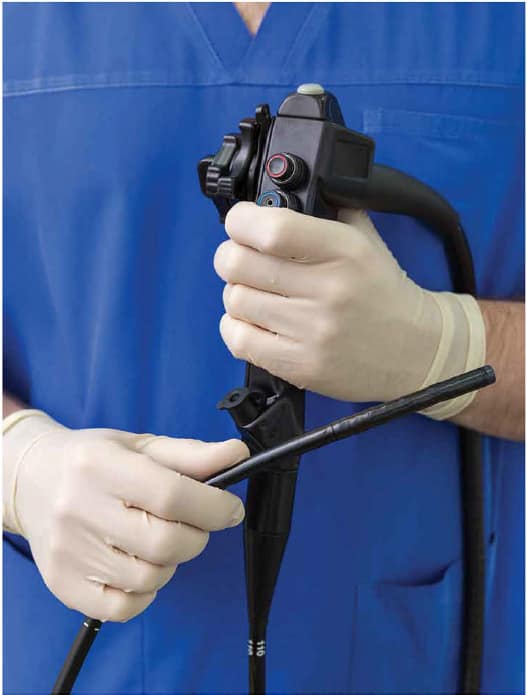
Successful cleaning of a exible endoscope does not happen by accident. The cleaning process begins with understanding the complexity of the device being cleaned. At rst glance, a exible endoscope looks like a simple device; however, closer inspection proves that to be incorrect. Flexible endoscopes are designed to perform a variety of functions, and each function requires a special component of the endoscope. Each exible endoscope has a control mechanism that allows the endoscope to be exed up and down and from side to side during use. This function enables the physician to visualize structures and move the endoscope to improve access during the procedure. Light guides project light through the endoscope and objective lenses enable visualization.
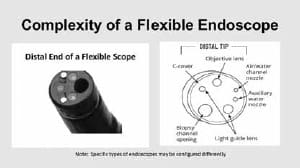
In some endoscopes, channels provide air, water and suction. A biopsy channel allows an instrument to be passed through the endoscope. Each of those functions requires intricate interior design of the device, and that complex design complicates the cleaning process. In addition to a complex design, endoscope channels cannot be visualized with the naked eye, so technicians are challenged to clean areas they cannot see. The distal tip of an endoscope indicates its complexity. Each channel within the endoscope serves a function and it is critical to the overall function of the endoscope. Technicians must clean all areas that become soiled during use and they must do so with little to no ability to see the channels they are cleaning. Figure 2 provides an illustration of the complex interior design of a exible endoscope.

FIGURE 1: The complexity of the interior of a exible endoscope is illustrated in the distal tip. Each function represented in the distal tip provides a glimpse of the complexity of the interior of the endoscope. Note: Not all endoscopes are alike. Distal tip and interior congurations vary with the intended function of the endoscope.

OBJECTIVE 2: IDENTIFY CHALLENGES TO CLEANING FLEXIBLE ENDOSCOPES
In addition to their complex conguration, there are other factors that create cleaning challenges when reprocessing exible endoscopes. The manufacturer’s instructions for use (IFU) must be followed exactly as they are written. When cleaning steps are skipped or when they are not performed for the correct amount of time or with the correct cleaning tools, cleaning errors also occur. This is particularly challenging because all endoscopes require multi-step cleaning. Some exible endoscopes have over 100 steps in their cleaning process. The manufacturer’s IFU must be readily available and followed to reduce the risk of cleaning errors. The cleaning process can also fail if soil is allowed to remain on the endoscope after its use. When soiled endoscopes are not immediately cleaned, soil may dry, thereby, making the endoscope more difcult to clean. Prolonged exposure
to soil and moisture after use can also enable biolm to form. Biolm is a collection of microorganisms that attach to surfaces and each other to form a colony; that colony produces a protective gel that is very difcult for detergents and disinfectants to penetrate. Biolm in a exible endoscope is very difcult to remove and poses a danger to patients. All exible endoscopes should be reprocessed as soon as possible after use to reduce the risk of dried soil and biolm formation. Some exible endoscope manufacturers require special cleaning processes (called delayed reprocessing procedures) to be enacted for endoscopes that sit for an hour or longer after they are used. It is important to check the IFU to determine cleaning time restrictions. Having access to the proper tools is another critical component of endoscope cleaning. Cleaning can fail if brushes of the wrong size are used. Brushes that are too small will not make appropriate contact with channel walls and openings. Brushes that are too large may impede the cleaning process. Cleaning solutions and other tools used for ushing and rinsing must also be available and used according to each manufacturer’s IFU. Training also plays a role in the success of the cleaning process. As previously stated, proper cleaning is a multi-step process that must be performed exactly as outlined in the IFU. Endoscope reprocessing technicians must also understand the chemicals and tools used in the cleaning process and must apply that knowledge correctly for every endoscope. No one should reprocess a exible endoscope alone unless they have had training and have completed a competency evaluation. Time is a signicant factor in successful endoscope cleaning. In many cases, endoscopes must be reprocessed and returned to the user department under tight timelines. Pressure is sometimes exerted to move the endoscope through the process quickly. When those timelines are unrealistic and demands for turnaround are forceful, technicians may feel tempted to skip steps or cut corners in the cleaning process; this can lead to unsafe endoscopes being released for use. In some cases, the cleaning process may be successful, but the endoscope may become recontaminated after cleaning; this may occur due to endoscope mishandling (e.g., handling a clean endoscope while wearing soiled PPE or placing an endoscope on an unclean surface after cleaning). Moisture is another danger for endoscope contamination. If a exible endoscope is not completely dried, any moisture that remains in the endoscope’s channels creates an environment where bacteria can grow and multiply. Bacteria multiply quickly and as they do, the level of contamination of an endoscope grows as well. Figure 3 provides an example of how quickly bacteria can grow. When an endoscope containing moisture is stored, its dark, wet lumens and crevices provide a receptive place for microorganisms to multiply.

FIGURE 3: When the endoscope is removed from the storage cabinet and placed into service, it is contaminated and poses a threat to patient safety.

OBJECTIVE 3: DISCUSS THE PREVALENCE OF DIRTY FLEXIBLE ENDOSCOPES
Even if dirty endoscopes were a rare occurrence in a healthcare facility, their occurrence would still be unacceptable. Unfortunately, incidents involving dirty endoscopes are all too common. In its 2018 Top 10 List of Health Technology Hazards, ECRI Institute cited endoscope reprocessing failures and improper cleaning as the number 2 and number 5 patient risks, respectively. A study conducted by Ofstead and Associates revealed that 99% of the time, one or more reprocessing steps were skipped or completed incorrectly. Multiple steps were skipped 45% of the time. Every endoscope reprocessing area should audit their cleaning processes to help ensure each step is being performed exactly as stated in the device manufacturer’s IFU. Dirty endoscopes pose a signicant risk to patients. There is a misconception that a dirty endoscope can be made safe by a high-level disinfection or sterilization process. It is important to remember that soil and bacteria remaining in an endoscope will not be eradicated by disinfection or sterilization processes. Those processes cannot compensate for inadequate cleaning. Put simply, any endoscope that is not clean will remain dirty and dangerous when used on the next patient. Each facility and technician must evaluate practices and take necessary steps to reduce the incidence of dirty exible endoscopes. Dirty exible endoscopes are a patient safety issue and their elimination should be prioritized.

CONCLUSION
Whenever a dirty endoscope is used in a procedure, the patient is put at risk. Several factors have an impact on the process of making a exible endoscope safe for patient use; this includes the device’s conguration, complex cleaning instructions, and human factors. Dirty endoscopes put patients at risk of infection. Training, proper cleaning tools and meticulous attention to detail can reduce that risk.

RESOURCES
International Association of Healthcare Central Service Materiel Management. 2017. Endoscope Reprocessing Manual, First Edition. Ofstead C, et al. Re-evaluating Endoscopy- associated Infection Risk Estimates & their Implication. American Journal of Infection Control. 41 (2013), pp. 734-6. 2. Ofstead C, et al. Endoscope Reprocessing Methods: a Prospective study on the Impact of Human Factors and automation. Gastroenterology Nursing, July/Aug 2010. ECRI Institute. 2018 Top 10 Health Technology Hazards. https://www.ecri.org/Resources/Whitepapers_and_reports/Haz_18.pdf Association for the Advancement of Medical Instrumentation. ANSI/AAMI ST91:2015. Flexible and semi-rigid endoscope processing in health care facilities.

Supervisory Continuing Education (SCE) lessons provide members with ongoing education focusing on supervisory or management issues. These lessons are designed for CER re-certication, but can be of value to any CRCST in a management or supervisory role. Earn Continuing Education Credits: Online: Visit www.iahcsmm.org for online grading at a nominal fee. By mail: Mailed submissions to IAHCSMM will not be graded and will not be granted a point value (paper/pencil grading of the SCE Lesson Plans is not available through IAHCSMM or Purdue Univer-sity; IAHCSMM accepts only online subscriptions). Scoring: Each online quiz with a passing score of 70% or higher is worth two points (2 contact hours) toward your CER re-certication (6 points) or CRCST re-certication (12 points). More information: IAHCSMM provides online grading service for any of the Lesson Plan varie-ties. Purdue University provides grading services solely for CRCST and CIS lessons.